
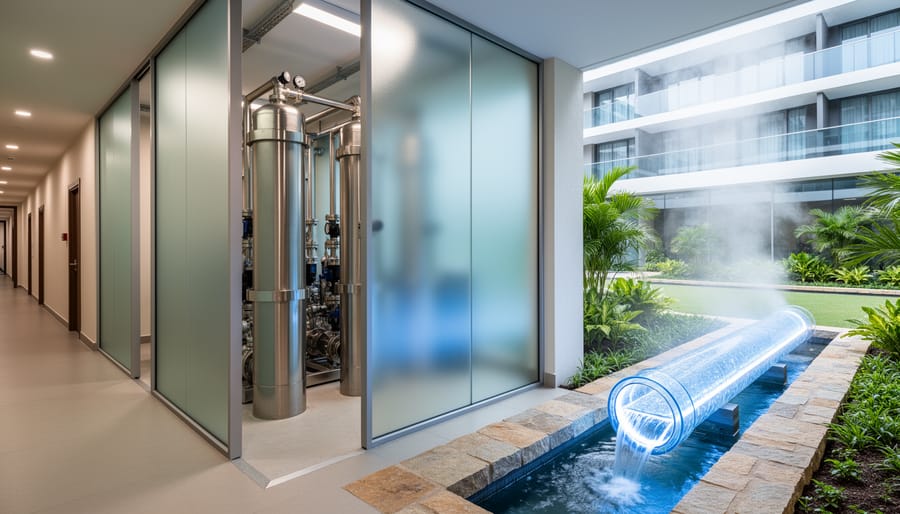
Hotel water treatment transforms incoming municipal supply and manages wastewater through a series of filtration, purification, and recycling systems designed to meet guest safety standards, reduce environmental impact, and lower operating costs. For hospitality properties, particularly those in water-stressed destinations, treatment infrastructure serves a dual purpose: ensuring reliable access to potable water while protecting local water resources from contamination.
The process works by combining physical, chemical, and biological treatment methods at different points in the property’s water cycle. Incoming water passes through filtration and softening systems to remove sediments, minerals, and potential contaminants before reaching guest rooms, kitchens, and recreational facilities. Wastewater follows a separate pathway through settling tanks, biological treatment units, and final polishing steps before discharge or reuse in irrigation and cooling systems.
Hotels implement these systems for compelling reasons beyond regulatory compliance. Treatment infrastructure insulates properties from water supply disruptions, a growing concern in tourism destinations facing seasonal shortages or climate variability. On-site recycling reduces dependence on municipal sources and wastewater networks that may already be strained by visitor populations. Properties with treatment capacity can also respond more flexibly to water quality issues, protecting guests from temporary contamination events in public systems.
The scale and complexity of hotel water treatment varies widely. A boutique property might install simple point-of-use filters and a small constructed wetland for greywater, while a large resort develops comprehensive systems handling everything from desalination to tertiary wastewater treatment. What matters most is matching the treatment approach to local conditions, property size, and destination priorities.
This guide walks through the essential components, safety considerations, and verification methods that make hotel water treatment both effective and sustainable.
Understanding Hotel Water Treatment Systems
Hotel water treatment refers to the full cycle of water management within hospitality properties, from the moment municipal or source water enters the facility through its eventual discharge or reuse. This encompasses two critical processes: incoming water purification to ensure quality standards for guest use, and wastewater treatment to manage what leaves the property responsibly. For hotels in tourism destinations already facing water stress, comprehensive treatment systems transform water from a consumable resource into a managed, reusable asset.
The scale of water use in hotels extends far beyond guest bathrooms. A typical property draws water for guest rooms, commercial kitchens, laundry operations, swimming pools, cooling systems, and landscaping. Each of these applications has different quality requirements and generates distinct wastewater streams. Kitchen greywater contains organic matter and oils, laundry discharge carries detergents and lint, while pool backwash includes concentrated chemicals. Understanding these varied demands helps hotels design treatment approaches that address specific needs rather than applying one-size-fits-all solutions.
In water-stressed tourism areas, comprehensive treatment becomes essential infrastructure rather than optional enhancement. Destinations that attract seasonal surges of visitors often see water demand spike precisely when natural supplies run lowest. Hotels that implement both supply-side purification and wastewater recovery directly reduce their draw on local freshwater sources while simultaneously minimizing the volume of contaminated discharge entering local systems. This dual approach addresses the complete water footprint rather than shifting the burden from extraction to disposal.
The difference between basic filtration and comprehensive treatment lies in system scope and recovery potential. Basic systems might filter incoming water for taste and remove sediment, then discharge all wastewater to municipal sewers. Comprehensive treatment captures greywater from showers, sinks, and laundry, processes it to remove contaminants, and redirects it for non-potable uses like toilet flushing, irrigation, or cooling tower makeup water. This closed-loop thinking aligns hotel operations with destination-level water management goals.
Equipment and Infrastructure Needed
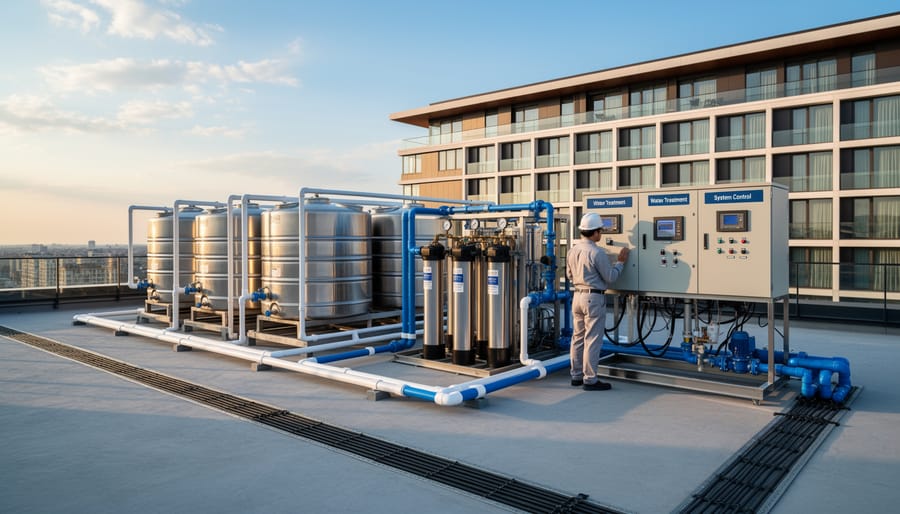
Effective hotel water treatment requires a layered infrastructure that addresses both incoming water purification and wastewater processing. The specific equipment varies based on the property’s size, local water quality, and intended reuse applications, but certain core components form the foundation of any comprehensive system.
Filtration and Separation Systems
Physical filtration removes suspended solids, sediment, and particulates from incoming water. Sand filters and cartridge systems handle coarser debris, while ultrafiltration and microfiltration membranes capture finer contaminants. For wastewater, primary treatment screens and settling tanks separate solids before biological processing. Hotels aiming to recycle greywater typically install multimedia filters that combine different media grades for progressively finer filtration.
Membrane systems, including reverse osmosis and nanofiltration units, provide advanced purification for potable applications or final polishing of recycled water. These technologies require pre-filtration to protect the membranes and consistent monitoring to maintain efficiency.
Treatment and Disinfection Equipment
Biological treatment units process organic waste through aerobic or anaerobic digestion, essential for properties managing their own wastewater. Membrane bioreactors combine biological treatment with membrane filtration in a compact footprint suitable for urban hotels with space constraints.
Disinfection equipment ensures treated water meets safety standards. Options include:
- UV sterilization systems that neutralize pathogens without chemicals
- Chlorination units for ongoing residual disinfection
- Ozone generators for high-level treatment in pools and spas
- Chemical dosing pumps that deliver precise amounts according to disinfection dosing standards
Storage and Distribution Infrastructure
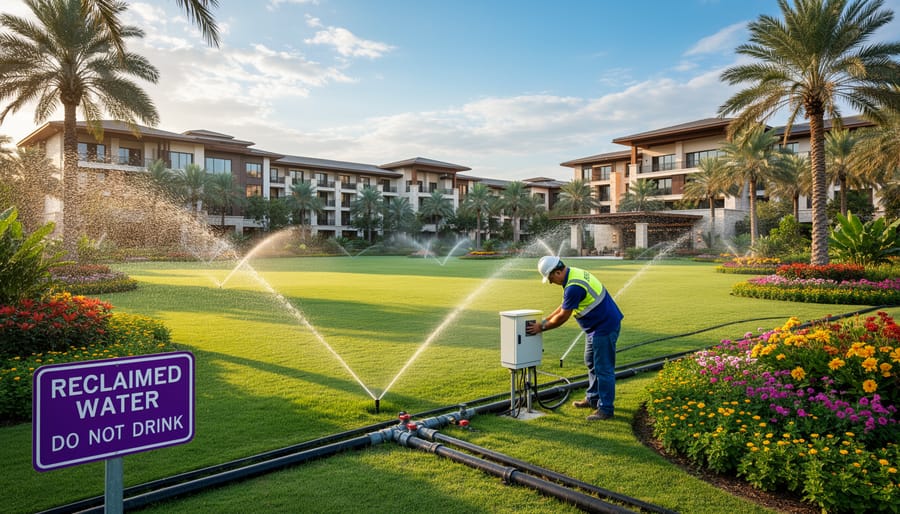
Storage tanks hold both incoming water and treated effluent, providing buffer capacity during peak demand and allowing time for treatment processes to complete. Separate tanks prevent cross-contamination between potable and non-potable supplies. Distribution pumps move treated water to designated uses, irrigation systems, cooling towers, toilet flushing, or laundry facilities, through dedicated purple-pipe networks that clearly identify recycled water lines.
Monitoring and Control Systems
Automated sensors continuously track water quality parameters including pH, turbidity, conductivity, and residual disinfectant levels. SCADA systems integrate these sensors with treatment equipment, adjusting chemical dosing and flow rates in real time. Data logging creates compliance records and identifies performance trends.
Small properties might implement decentralized greywater recycling units serving specific areas, while large resorts typically require centralized treatment plants with redundant components ensuring continuous operation. The infrastructure investment scales with treatment goals and local regulatory requirements.
Critical Considerations Before Implementation
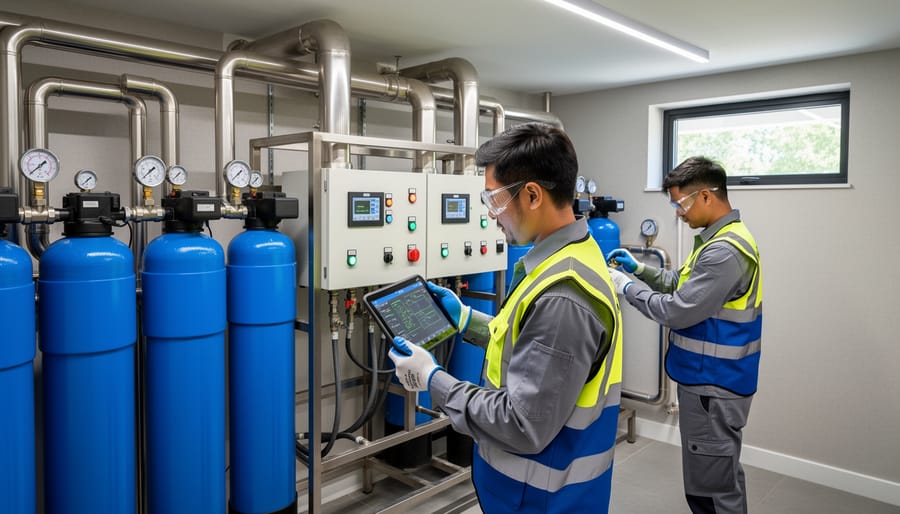
Before implementing any water treatment system, hotels must navigate a complex landscape of regulatory requirements and safety protocols that vary by jurisdiction. Most tourism destinations have established frameworks governing both incoming water treatment and wastewater discharge, and compliance isn’t optional, it’s a legal requirement that protects public health and environmental integrity.
Start by identifying the regulatory authorities in your area. These typically include local health departments, environmental protection agencies, and water resource management bodies. Each will have specific requirements for water quality standards, discharge permits, and operational monitoring. Many destinations with significant tourism activity have adopted treatment and performance standards for water reuse that dictate acceptable parameters for different applications, from landscape irrigation to cooling systems.
Water quality testing forms the foundation of any safe treatment program. Establish baseline testing protocols before installation, then maintain regular monitoring schedules afterward. Essential parameters include microbial content, pH levels, turbidity, total dissolved solids, and specific contaminants relevant to your water source. Many jurisdictions require third-party laboratory verification rather than relying solely on in-house testing.
Chemical handling procedures demand particular attention. Treatment systems often use chlorine, ozone, or other disinfectants that require proper storage, dosing equipment, and trained personnel. Develop clear protocols for chemical inventory management, spill response, and staff protection.
Environmental discharge regulations govern what treated water can be released and where. Even treated greywater may require permits before discharge to municipal systems, surface waters, or groundwater recharge areas. Partner with local water authorities early to understand these requirements and integrate them into your system design. This collaborative approach not only ensures compliance but often reveals opportunities to contribute to broader destination water management goals.
Step-by-Step Implementation Process
Conduct a Water Audit
Start by gathering comprehensive data on every water-using area in the property: guest rooms, kitchens, laundries, pools, spas, landscaping, and cooling systems. Install temporary meters on major consumption points if permanent monitoring isn’t in place. Track usage patterns across peak and off-peak seasons to understand fluctuations tied to occupancy rates.
Document your baseline water sources, municipal supply, groundwater wells, or surface water, and test quality parameters including hardness, dissolved solids, pH, and potential contaminants. Local water authority reports provide context on seasonal variations and source reliability. Compare your incoming water quality against the standards required for different hotel uses; drinking water, irrigation, and cooling towers each have distinct treatment needs.
Map where water flows through your property and where it exits. Identify high-consumption areas that offer the greatest potential for treatment and reuse, greywater from showers and sinks often represents the largest recoverable stream. This mapping reveals which sources could be treated separately rather than sending all wastewater to a single system.
Calculate the actual treatment capacity you’ll need based on daily volumes, not just average use. Hotels experience surge demand during morning checkout periods and event bookings. Factor in local water stress conditions: properties in drought-prone tourism destinations require more aggressive conservation and reuse strategies than those in water-abundant regions. A thorough audit provides the foundation for designing a treatment system matched to your specific operational reality and optimize water energy use across all hotel systems.
Design the Treatment Strategy
Once your water audit reveals consumption patterns and quality needs, engage qualified water engineers to translate those findings into a functioning treatment system. This isn’t a one-size-fits-all process, the right design depends on your property’s scale, water sources, local regulations, and reuse goals.
Start by matching treatment technologies to your hotel’s specific challenges. If incoming municipal water has high mineral content, reverse osmosis or ion exchange systems may be necessary for kitchen and beverage operations. For greywater from showers and laundry, biological treatment followed by filtration prepares water for landscape irrigation or toilet flushing. Engineers will recommend technology combinations that address your quality targets while staying within operational budgets.
Equipment sizing matters as much as selection. Undersized systems will fail during peak occupancy; oversized infrastructure wastes capital and energy. Engineers calculate treatment capacity based on your audit data, factoring in seasonal occupancy swings and planned expansions. A coastal resort with irrigation needs will size differently than an urban hotel focused on potable water quality.
Greywater reuse offers the quickest returns. Engineers typically design dual-plumbing systems that separate and treat water from low-contamination sources, bathroom sinks, showers, laundry, then redirect it to toilets, cooling towers, or gardens. This reduces freshwater demand without compromising guest safety.
Finally, the design must integrate seamlessly with existing infrastructure. Treatment units need space, power connections, and access for maintenance. Work with engineers who visit the site, understand your operational constraints, and design around the realities of a functioning hotel rather than imposing disruptive layouts.
Secure Permits and Approvals
Securing the necessary permits and approvals is a critical phase that determines whether your water treatment system can legally operate. Start by identifying which local and national authorities govern water use, extraction, and discharge in your tourism destination, this typically includes environmental agencies, municipal water departments, and tourism regulatory bodies.
Contact these agencies early to understand specific requirements for your property. Many destinations now have integrated water management frameworks that coordinate between tourism development and local resource protection. Submit detailed technical documentation showing your proposed system design, water sources, treatment methods, discharge points, and anticipated volumes.
Expect the approval process to take anywhere from weeks to several months depending on your location and system complexity. Tourism destinations facing water stress often have stricter review processes but may also offer expedited pathways for projects demonstrating significant water conservation benefits.
Work with your water engineer to prepare applications that clearly demonstrate environmental safeguards and compliance with discharge quality standards. Some destinations require environmental impact assessments or community consultation before approving hotel water projects. Budget time for potential revisions to your plans based on regulatory feedback, and maintain open communication with authorities throughout the process to avoid delays that could derail your implementation timeline.
Install Treatment Infrastructure
Installing treatment infrastructure requires careful coordination to balance effective implementation with minimal disruption to guest services. Begin by selecting contractors experienced in hospitality water systems who understand the unique demands of operating hotels. Request references from similar properties and verify their familiarity with local codes governing water treatment in tourism facilities.
Schedule major installation work during low occupancy periods when possible, and establish clear treatment zones that allow phased implementation. Prioritize guest-facing areas to maintain service quality while back-of-house systems come online. Coordinate with your engineering team to integrate monitoring sensors with existing building management systems, including HVAC integration where water treatment affects heating and cooling operations.
Create temporary water management plans that ensure uninterrupted service during transitions between old and new infrastructure. Install automated alerts that notify maintenance staff immediately if treatment processes deviate from parameters, protecting both water quality and guest experience throughout the commissioning period.
Train Staff and Establish Protocols
Even the most sophisticated water treatment infrastructure delivers little value if your team doesn’t understand how to operate it. Start by developing clear standard operating procedures that document every aspect of system operation, from daily monitoring routines to monthly maintenance tasks. These SOPs should use simple language and include visual guides, photos or diagrams showing valve locations, gauge readings, and control panel settings work far better than text-heavy manuals.
Train your maintenance staff first, focusing on daily inspection routines, water quality testing protocols, and how to recognize warning signs like unusual odors, pressure drops, or filter discoloration. Housekeeping teams need different training: how water-saving fixtures work, which cleaning products are safe for greywater systems, and why reporting leaks immediately matters for system efficiency. Make training practical and hands-on rather than classroom-based. Walk through the actual equipment, demonstrate testing procedures, and let staff practice while you’re there to answer questions.
Create monitoring schedules that assign specific tasks to specific roles. Maintenance might check filter pressures and chemical levels daily, while a supervisor reviews quality test results weekly. Use simple checklists that staff can complete on tablets or paper, anything requiring complex data entry rarely gets done consistently.
Finally, establish emergency response plans covering scenarios like system failures, contamination alerts, or extreme weather affecting water supply. Designate who makes decisions, how to switch to backup systems, and when to notify guests or health authorities. Run through these scenarios with your team at least twice yearly so responses become automatic rather than panicked improvisation.
Commission and Test the System
Before opening your water treatment system to full hotel operations, systematic commissioning ensures every component performs as designed. This phase verifies that your investment will deliver safe, reliable results.
Start with component-level testing. Run each filtration stage independently, checking flow rates against design specifications and confirming pressure differentials match manufacturer guidelines. Test automated controls by simulating various scenarios, demand spikes, low-flow conditions, power interruptions, to ensure sensors and valves respond correctly.
Water quality verification comes next. Collect samples at multiple points: incoming water, each treatment stage, and final output. Laboratory analysis should test for parameters relevant to your intended uses, turbidity, pH, dissolved solids, microbial content, and any local contaminants of concern. Compare results against applicable standards for potable water, greywater reuse, or irrigation, depending on your system’s purpose.
Calibrate monitoring equipment using reference standards. Ensure sensors reading pH, conductivity, or flow rates provide accurate data, as these measurements guide daily operations and maintenance decisions.
Phase your rollout thoughtfully. Begin with non-critical applications like landscape irrigation or cooling towers before expanding to guest-facing uses. This staged approach allows you to refine operations, train staff on real conditions, and build confidence in system performance. Document all test results and calibration records, they establish your baseline for ongoing management and demonstrate due diligence to regulators and stakeholders.
Verification and Ongoing Management
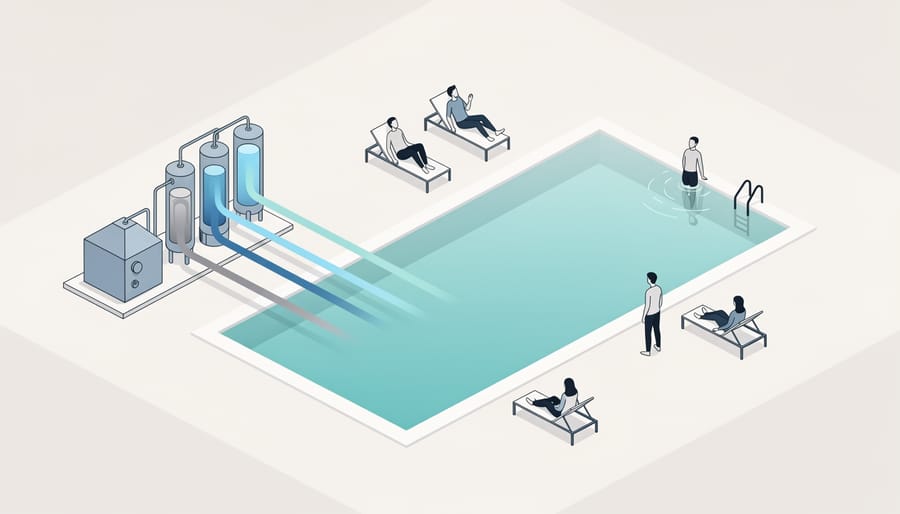
Verifying your treatment system performs as designed protects your investment and ensures you’re delivering on sustainability commitments. Establish clear monitoring routines from day one rather than waiting for problems to surface.
Water quality testing forms the foundation of verification. Test treated water weekly during the first three months, then monthly once the system stabilizes. Compare results against your baseline audit and local discharge standards. Track pH levels, turbidity, dissolved solids, and bacterial counts depending on your reuse applications. Many hotels integrate energy monitoring for treatment systems to track power consumption alongside water quality, revealing efficiency patterns that manual checks miss.
Flow meters provide real-time data on water moving through each treatment stage. Install meters at intake points, between treatment phases, and at reuse outlets. Daily flow readings quickly expose leaks, blockages, or unusual consumption patterns. One resort in the Caribbean caught a faulty valve within hours because flow data dropped unexpectedly, preventing what would have been weeks of unnoticed water waste.
Track these indicators to measure system effectiveness:
- Volume of water treated and reused daily compared to total consumption
- Percentage reduction in freshwater withdrawal from municipal or natural sources
- Energy use per cubic meter of water treated
- Chemical consumption rates and any deviations from expected levels
- Equipment downtime and maintenance frequency
- Cost per cubic meter of treated water versus purchasing freshwater
Maintenance schedules prevent failures before they happen. Replace filters according to manufacturer guidelines, typically every three to six months depending on water quality and volume. Clean membranes quarterly. Calibrate sensors monthly. Hotels that automate treatment operations through integrated building management systems reduce missed maintenance tasks and extend equipment lifespan.
Calculate return on investment by comparing pre-treatment water bills against current costs including treatment operation, maintenance, and staff time. Most systems show measurable savings within the first year, with payback periods ranging from two to five years depending on local water pricing and reuse volume.
Collaborative Success Stories from Tourism Destinations
Hotels across water-stressed tourism regions are proving that comprehensive water treatment delivers meaningful benefits for both properties and the communities that host them. These collaborative efforts show how hospitality can lead in resource stewardship while strengthening destinations.
In the Maldives, a group of resorts worked with the national water authority to install advanced treatment systems that recycle greywater for cooling towers, landscape irrigation, and toilet flushing. This partnership reduced freshwater demand on local desalination plants, which had been struggling to meet combined resident and visitor needs. The properties now share maintenance expertise and negotiate group purchasing agreements for treatment supplies, making the systems more affordable for smaller hotels joining the program. Guest feedback surveys revealed that travelers appreciate transparency about these efforts when presented through simple in-room cards explaining how their shower water supports island gardens.
A coastal hotel association in southern Spain partnered with municipal water managers to implement coordinated treatment standards across member properties. Hotels that met quality benchmarks for treated water earned priority access during seasonal restrictions, incentivizing investment in robust systems. The initiative freed up municipal freshwater for residential use during peak tourism months while allowing hotels to maintain operations. Several properties reported that water treatment systems helped reduce operating costs over time as reused water lowered consumption charges and minimized strain on heating equipment.
Tourism authorities in Cape Town supported hotels through a technical assistance program following the city’s water crisis. Government engineers conducted audits and helped properties design context-appropriate systems, while grants covered a portion of installation costs for hotels serving as demonstration sites. These pilot hotels opened their treatment facilities for industry tours, creating a knowledge-sharing network that accelerated adoption across the hospitality sector. The collaborative approach built trust between tourism operators and water officials, establishing relationships that continue to shape destination planning.
A mountain resort in Colorado coordinated with the watershed district to ensure treated water discharged from its system met standards that protected downstream ecosystems. The property hired a local environmental nonprofit to monitor water quality and biodiversity indicators, publishing annual reports that reinforced accountability to the surrounding community. This transparency strengthened the resort’s social license to operate in a region where water rights remain politically sensitive.
These examples demonstrate that hotel water treatment succeeds when properties engage as partners in destination stewardship rather than isolated actors. Effective systems combine technical performance with community collaboration and transparent communication.
Common Questions About Hotel Water Treatment
What types of treatment are most cost-effective for hotels?
Greywater recycling systems targeting laundry and bathroom water typically offer the best return, as they capture high-volume streams and reduce both freshwater intake and wastewater discharge. The cost-effectiveness depends on your property’s water tariffs, existing infrastructure, and local reuse regulations.
Can treated water be safely used for all hotel applications?
Safety and permissibility vary by treatment level and local regulations. Most jurisdictions allow properly treated greywater for toilet flushing, landscape irrigation, and cooling systems, while potable applications like drinking, cooking, and bathing require more advanced treatment and stricter regulatory approval.
How long does implementation typically take?
Timelines range from a few months for straightforward greywater systems to over a year for comprehensive treatment infrastructure. Factors include permitting duration, equipment procurement, installation complexity, and whether work happens during renovations or requires dedicated downtime.
How should hotels communicate water treatment efforts to guests?
Transparency builds trust. Use in-room signage, website content, and property tours to explain which water sources are treated and how, emphasizing both environmental benefits and safety standards. Many guests appreciate knowing their stay supports water conservation in the destination.
Return on investment depends heavily on local water costs and the scale of reuse. Properties in water-scarce destinations with high municipal tariffs often recover installation costs faster than those in water-abundant areas with low rates. Reduced utility bills, potential incentives from local authorities, and enhanced guest appeal all contribute to financial returns, though expecting payback within a specific timeframe requires site-specific analysis.
Hotels play a crucial role in destination water management beyond their own operations. As significant water consumers in tourism areas, properties that implement effective treatment reduce pressure on municipal supplies and natural sources that local communities depend on. When hotels collaborate with regional water authorities, share lessons learned, and participate in destination-wide conservation initiatives, they help ensure the long-term viability of the places that attract visitors. This collective approach strengthens both community relationships and the destination’s resilience against water stress.
Implementing effective water treatment in hotels is more than an operational upgrade, it’s a commitment to the communities and ecosystems that sustain tourism. Properties that invest in comprehensive treatment systems reduce pressure on local water supplies, protect fragile environments, and set a standard for responsible hospitality. This work matters most in destinations where water scarcity threatens both residents and visitors, making every liter saved a contribution to long-term viability.
Hotels don’t achieve this alone. The most successful implementations emerge from collaboration with local water authorities, environmental organizations, and community stakeholders. These partnerships ensure treatment systems align with regional water management goals, respect local priorities, and create shared benefits. When hotels work alongside municipal planners and conservation groups, they become active participants in preserving the natural and cultural assets that draw travelers in the first place.
The path forward is clear and achievable. Start with a thorough water audit, engage qualified professionals for system design, and commit to ongoing monitoring and maintenance. Communicate your efforts transparently, guests increasingly value properties that demonstrate environmental leadership, and local communities deserve to see tangible results from hotel operations in their region.
Water treatment isn’t a solution you implement once and forget. It’s a continuous practice of stewardship that protects tourism destinations for future generations while strengthening your property’s resilience and reputation today.