
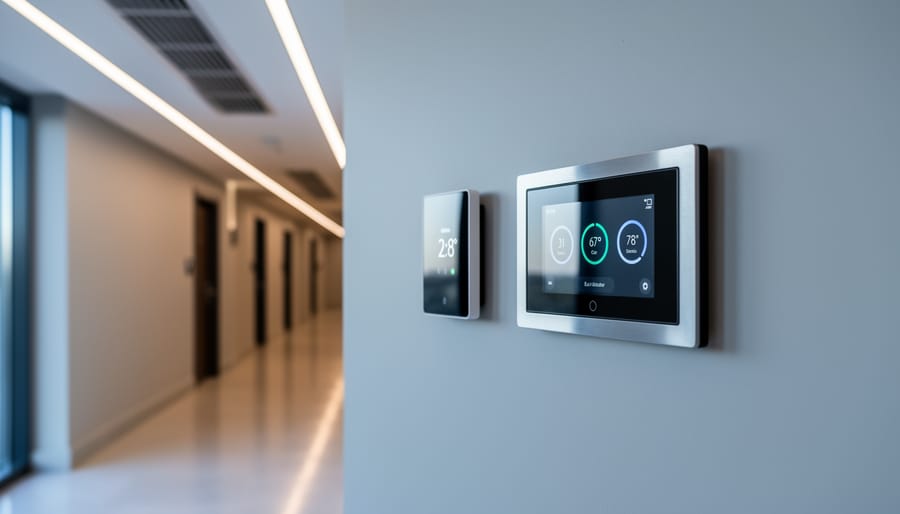
A hotel energy management system is a digital platform that monitors, controls, and optimizes energy consumption across a hotel’s operations, from heating and cooling to lighting and appliances. These systems use sensors, automation, and data analytics to reduce waste, lower utility costs, and minimize environmental impact without compromising guest comfort.
For an industry where buildings operate 24/7 and energy accounts for up to 60% of a hotel’s carbon footprint, these systems represent one of the most practical pathways to meaningful sustainability. Hotels around the world are proving that efficiency and hospitality go hand in hand. A mid-sized property can typically reduce energy consumption by 20-30% within the first year of implementation, translating to significant cost savings that can be reinvested into staff training, community programs, or further green initiatives.
What makes these systems particularly powerful is their ability to learn and adapt. They detect occupancy patterns, adjust temperature settings based on guest presence, and identify equipment malfunctions before they become costly problems. For environmentally conscious travelers choosing where to stay, hotels with sophisticated energy management demonstrate a concrete commitment to reducing their environmental footprint rather than simply marketing green intentions.
This article explains how hotel energy management systems work, breaks down their core components, and explores the different types available to properties of all sizes. You’ll discover real-world applications that are already helping hotels become better stewards of resources while maintaining the quality experiences guests expect.
Understanding Hotel Energy Management Systems
Hotel energy management systems (HEMS) are integrated technology platforms that monitor, control, and optimize energy consumption across all areas of a hotel property. These sophisticated systems combine hardware sensors, smart devices, and software analytics to track electricity, heating, cooling, and water usage in real time. Unlike traditional building controls that operate on fixed schedules, modern HEMS adapt dynamically to occupancy patterns, weather conditions, and operational demands.
The purpose of HEMS extends beyond simple cost reduction. These systems serve as the technological foundation for hotels pursuing measurable sustainability goals, whether that means achieving green certifications, meeting corporate environmental targets, or responding to growing guest expectations for responsible travel. In 2026, travelers increasingly research a hotel’s environmental practices before booking, and properties without demonstrated energy efficiency risk losing market share to competitors who can showcase their conservation efforts.
For hotel operators, HEMS transform energy from an uncontrollable expense into a manageable resource. The systems identify wasteful patterns, prevent energy use in unoccupied spaces, and provide the data needed to make informed decisions about equipment upgrades or operational changes. This visibility matters particularly for properties with aging infrastructure or those in regions facing rising utility costs.
What makes HEMS essential for modern hospitality is their ability to deliver sustainability outcomes without compromising service quality. Guests experience comfortable, well-lit, climate-controlled rooms while the property simultaneously reduces its carbon footprint and operating expenses. This balance between environmental responsibility and hospitality excellence defines successful energy management in today’s tourism industry.
How Hotel Energy Management Systems Work
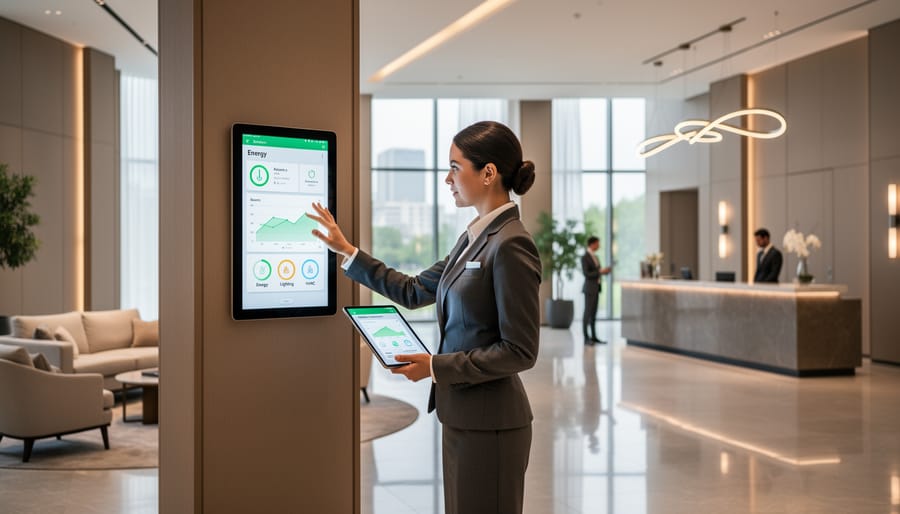
Real-Time Monitoring and Data Collection
Hotel energy management systems continuously gather consumption data through an interconnected network of sensors and smart meters installed throughout the property. These devices monitor electricity, water, heating, and cooling usage at granular levels, tracking individual guest rooms, public spaces like lobbies and restaurants, back-of-house areas including kitchens and laundries, and major equipment such as HVAC units and refrigeration systems.
The monitoring happens in real time, capturing fluctuations minute by minute rather than relying on monthly utility bills. Occupancy sensors detect when guests enter or leave rooms, while temperature probes track climate conditions. Smart thermostats record heating and cooling cycles. Lighting controllers log when fixtures switch on and off. All this data flows to a central management platform that aggregates information across every monitored point.
This comprehensive visibility reveals consumption patterns that would otherwise remain invisible: which floors use the most energy during different times of day, how much power vacant rooms consume, when peak demand occurs, and which equipment operates inefficiently. The data becomes the foundation for identifying waste and targeting improvements where they’ll deliver the greatest impact on both environmental footprint and operational costs.
Intelligent Automation and Control
Once sensors detect guest check-in or room occupancy, the system automatically adjusts temperature, lighting, and ventilation to optimal comfort levels. When a room becomes vacant, controls scale back to energy-saving mode within minutes, reducing HVAC output by up to 40% without manual intervention. These automated responses extend throughout the property: conference rooms dim lights during bright afternoon hours, while guest corridors reduce illumination during late-night periods when foot traffic drops.
Smart hotel energy management systems learn usage patterns over time, anticipating energy demands based on historical data. If a meeting room consistently fills each Tuesday morning, the system pre-conditions that space fifteen minutes before arrival, balancing guest comfort with energy efficiency. Environmental sensors monitor outdoor temperature and humidity, prompting the platform to adjust indoor climate controls accordingly. On cooler evenings, the system might reduce air conditioning workload or leverage natural cooling by signaling window actuators in properties equipped with operable windows.
This intelligent automation eliminates the need for staff to manually adjust hundreds of individual controls daily. The system operates continuously, making thousands of micro-adjustments that collectively create substantial energy savings while maintaining the seamless hospitality experience guests expect.
Core Components of Hotel Energy Management Systems
A complete hotel energy management system consists of interconnected hardware and software components working together to monitor, control, and optimize energy consumption throughout a property. These elements form an integrated ecosystem that transforms how hotels manage their environmental resources.
The physical and digital infrastructure of hotel energy management systems includes several essential components that enable automated control and real-time visibility:
- Smart Thermostats
- Internet-connected climate control devices that adjust heating and cooling based on occupancy, time schedules, and guest preferences. These thermostats communicate with the central system to maintain comfort while preventing energy waste in unoccupied spaces.
- Occupancy Sensors
- Motion and presence detection devices that identify when rooms or areas are in use, triggering automated responses for lighting, temperature, and ventilation systems. They ensure energy is directed only to occupied spaces without requiring manual guest action.
- Lighting Controls
- Automated dimming systems, timers, and occupancy-linked switches that manage artificial lighting across guest rooms, hallways, public areas, and back-of-house operations. These controls can adjust intensity based on natural daylight availability and activity levels.
- Building Management Software
- The central platform that collects data from all connected devices, analyzes patterns, generates reports, and enables facility managers to set rules and monitor performance. This software provides the intelligence layer that transforms raw data into actionable insights.
- IoT Devices and Sensors
- Network-connected monitors that track specific energy consumers like water heaters, refrigeration units, laundry equipment, and kitchen appliances. These devices provide granular visibility into where energy is consumed across hotel operations.
- Central Dashboards
- Visual interfaces accessible via computer or mobile device that display real-time energy consumption, historical trends, cost breakdowns, and system alerts. These dashboards enable managers to spot inefficiencies quickly and measure the impact of operational changes.
Beyond individual components, the integration layer proves equally critical. Communication protocols and network infrastructure allow disparate devices to share information and coordinate responses. When an occupancy sensor detects a guest has left their room, it signals the thermostat to adjust temperature, prompts lighting controls to power down, and updates the building management software with new occupancy status.
Modern systems also incorporate weather data feeds and utility rate information. By understanding external temperature forecasts and time-of-use electricity pricing, the system can precool or preheat spaces during lower-rate periods, reducing both costs and strain on the power grid during peak demand.
The scalability of these components allows hotels to start with basic implementations and expand over time. A small property might begin with smart thermostats and occupancy sensors in guest rooms, then gradually add comprehensive monitoring across other building systems as budgets allow and staff expertise grows.
Types of Hotel Energy Management Solutions
Hotels can choose from several distinct energy management system approaches, each designed to match different operational scales and sustainability ambitions. Understanding these options helps properties select solutions aligned with their guest capacity, budget, and environmental commitments.
Standalone Room Control Systems represent the entry point for many properties. These systems focus exclusively on individual guest rooms, automating lighting, temperature, and power outlets based on occupancy detection. A sensor recognizes when guests leave and adjusts climate control accordingly, then restores comfortable conditions before their return. Hotels with 50-150 rooms often start here, achieving 20-30% energy reductions in guest areas without overhauling existing infrastructure.
Building Management System (BMS) Integration takes a facility-wide approach, connecting HVAC, lighting, water heating, and refrigeration into a unified platform. Rather than managing rooms in isolation, these hotel energy management systems optimize entire buildings. A resort might coordinate its conference center air conditioning with event schedules while simultaneously adjusting pool area heating based on weather forecasts. This approach suits larger properties where operational complexity demands centralized oversight.
Cloud-Based Energy Platforms offer the most comprehensive capabilities, combining real-time monitoring with predictive analytics and remote management. These systems aggregate data from every energy-consuming asset across multiple properties, enabling hotel groups to benchmark performance, identify inefficiencies, and implement improvements from a central dashboard. Machine learning algorithms detect patterns invisible to human operators, like a laundry facility consuming excess energy during off-peak hours, and automatically adjust operations. Properties pursuing carbon neutrality targets increasingly adopt these platforms for their ability to track progress toward measurable sustainability commitments.
Hybrid Solutions blend these approaches, allowing hotels to phase implementation. A boutique property might install room controls first, then gradually integrate public spaces and back-of-house operations as budget permits. This flexibility makes advanced energy management accessible to properties of any size, supporting the industry’s collective shift toward responsible resource stewardship.
Practical Applications in Hotel Operations
Hotel energy management systems transform abstract sustainability goals into concrete operational improvements across every department. These platforms don’t simply monitor usage; they actively reshape how properties consume resources throughout daily operations.
Guest Rooms
Room occupancy sensors form the operational backbone of modern HEMS deployment. When guests check out, the system automatically adjusts thermostats to energy-saving modes rather than continuing to heat or cool vacant spaces at full capacity. Some properties report cutting room energy consumption by 20-30% through occupancy-based climate control alone. Advanced systems detect when guests open windows and temporarily suspend HVAC operation to avoid conditioning outdoor air, a common waste point in traditional hotel setups.
Smart card access integration extends this intelligence further. The moment a guest removes their keycard and leaves, the system can dim lights to minimal levels and adjust temperatures to setback ranges, then restore comfort settings when motion sensors detect their return.
Common Areas and Back-of-House Operations
Hotel energy management systems orchestrate consumption across diverse facility zones:
– Lobby and corridor lighting adjusts based on natural daylight availability and foot traffic patterns throughout the day
– Kitchen equipment scheduling powers down prep stations and warming units during documented low-activity periods
– Pool and spa heating optimizes temperature maintenance cycles to match usage patterns and weather forecasts
– Laundry operations shift heavy loads to off-peak electricity hours when rates are lower
– Conference room climate control activates only when bookings are scheduled rather than maintaining constant conditioning
Maintenance and Engineering
Beyond direct consumption control, HEMS platforms provide maintenance teams with predictive insights. Systems flag equipment operating outside normal efficiency parameters, allowing staff to address minor issues before they become costly failures. A pump drawing more power than baseline indicates potential problems; unusual compressor cycles suggest refrigerant levels need checking. This diagnostic capability transforms energy management from passive monitoring into active asset protection, extending equipment life while reducing emergency repair incidents that disrupt guest experiences.
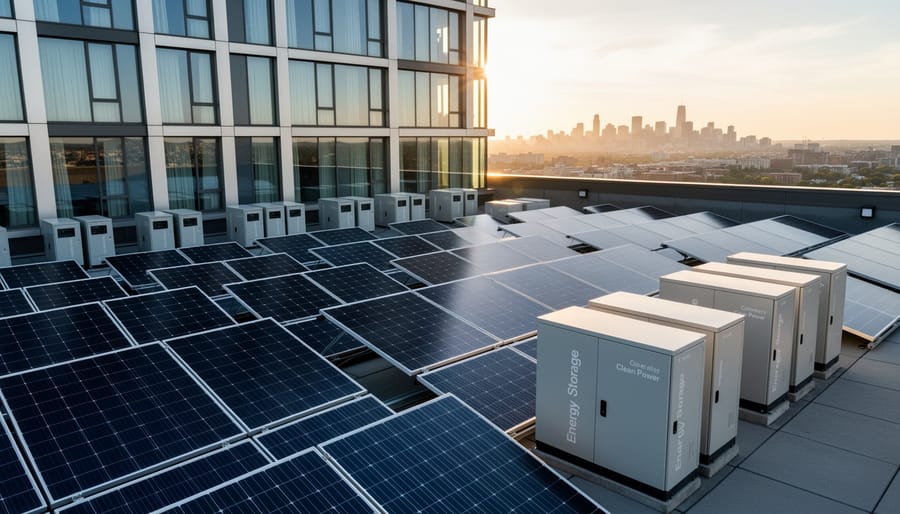
Success Stories: Hotels Leading the Way
Hotels around the world are demonstrating that energy management systems deliver real environmental and financial benefits while enhancing guest experiences. These success stories reveal how properties of different sizes have partnered with technology providers, local communities, and sustainability organizations to achieve remarkable results.
The Proximity Hotel in Greensboro, North Carolina, emerged as a pioneer by integrating comprehensive energy management systems from its 2007 opening. Through smart controls monitoring every aspect of energy use, from individual room sensors to building-wide automation, the property reduced energy consumption by 39% compared to conventional hotels. This system works alongside geothermal heating, solar panels, and regenerative elevators, creating a model that inspired numerous properties to follow. The hotel’s approach proved that advanced energy management doesn’t require sacrificing comfort or service quality.
In Singapore, Marina Bay Sands implemented an enterprise-wide energy management platform across its massive integrated resort complex. The system monitors more than 40,000 data points in real time, automatically adjusting lighting, cooling, and equipment operations based on occupancy patterns and environmental conditions. Within three years, the property achieved a 12% reduction in energy intensity despite increasing guest volumes, preventing approximately 15,000 tons of carbon emissions annually. The resort collaborated with local universities to share operational data for sustainability research, benefiting Singapore’s broader hospitality industry.
European properties like the Scandic Hotels chain have embraced energy management systems across their entire portfolio of more than 280 hotels. By standardizing monitoring and control systems, Scandic reduced energy consumption per guest night by 23% while training staff across all locations to understand and optimize system performance. This collaborative approach created employment opportunities in sustainable hospitality management and positioned the chain as an industry leader in environmental stewardship.
These examples demonstrate that hotel energy management systems create value beyond individual properties, fostering partnerships that strengthen communities and advance sustainable tourism practices across entire regions.
Common Questions About Hotel Energy Management Systems
What does it cost to implement a hotel energy management system?
Implementation costs vary widely based on property size and system complexity, ranging from a few thousand dollars for basic room controls to $50,000+ for comprehensive platforms in larger hotels. Most properties see payback periods of 2-4 years through energy savings.
Will guests notice changes to their room comfort?
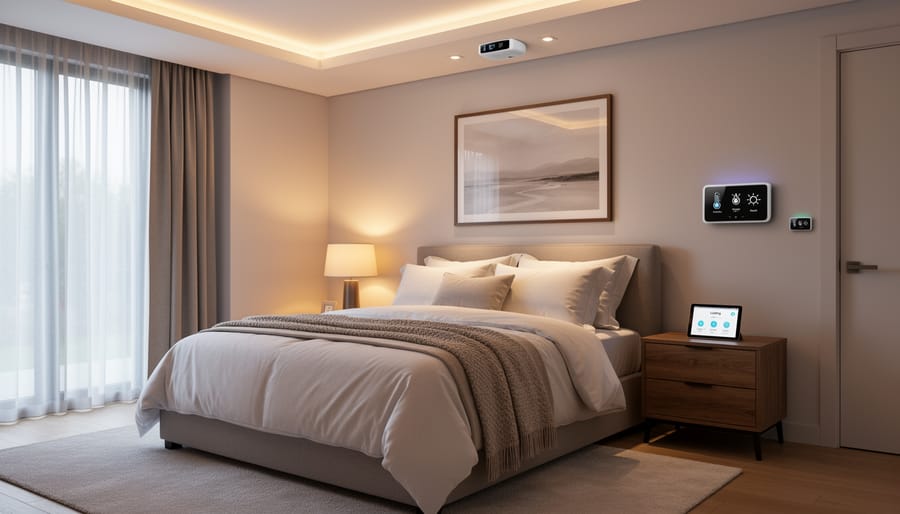
Modern systems maintain guest comfort while optimizing energy use. Temperature adjustments typically occur only in unoccupied rooms, and occupied spaces remain fully controllable by guests through standard thermostats or mobile apps.
How much staff training is required?
Initial training usually takes just a few hours for front desk and maintenance teams. Most platforms feature intuitive dashboards that staff can navigate easily, with ongoing support available from system providers.
Can these systems integrate with our existing building infrastructure?
Yes, most hotel energy management systems are designed to work with existing HVAC, lighting, and building automation equipment. Wireless solutions offer particularly flexible installation without extensive retrofitting.
These systems represent a practical investment that aligns sustainability goals with operational efficiency. Hotels report that guests appreciate knowing their accommodation prioritizes environmental responsibility, and staff find the centralized monitoring simplifies daily operations. The technology has matured significantly, making adoption accessible for properties of all sizes rather than just luxury flagships.
For hotels considering implementation, starting with high-impact areas like guest rooms and public spaces often makes sense, with the option to expand coverage as budgets allow. The collaborative nature of these projects, involving technology partners, staff input, and sometimes guest feedback, creates solutions tailored to each property’s unique needs while contributing to the broader goal of reducing tourism’s carbon footprint.
how it works
Hotel energy management systems orchestrate building-wide efficiency through an interconnected network of sensors, controllers, and software that monitor and adjust energy use in real time. The process begins with data collection: occupancy sensors in guest rooms detect whether spaces are occupied, while temperature and light sensors track environmental conditions throughout the property. Smart thermostats, lighting controls, and HVAC equipment connect to a central platform that analyzes consumption patterns across all zones.
When a guest checks out, the system automatically adjusts room temperature to an energy-saving setpoint and dims or switches off lights. During peak demand periods, the platform can temporarily reduce power to non-critical areas like back-of-house storage or shift cooling loads to maintain guest comfort while lowering utility costs. The software learns from historical data, predicting when demand will spike based on occupancy forecasts, weather patterns, and time of day.
Property managers access dashboards showing energy use by department, equipment type, or individual room, enabling them to identify inefficiencies and track progress toward sustainability targets. This continuous feedback loop transforms static buildings into responsive environments that balance guest experience with environmental stewardship.
Types or components
Hotels can choose from three primary system architectures, each suited to different property sizes and operational needs.
Centralized Systems serve larger hotels and resorts with a single control hub managing all building zones from one location. These comprehensive platforms integrate HVAC, lighting, and power distribution across hundreds of rooms simultaneously, ideal for properties with dedicated engineering staff.
Distributed Systems break control into multiple localized units throughout the property, one controller per floor or building section. This approach offers flexibility for phased installations and suits properties with distinct wings or multiple buildings on campus.
Hybrid Cloud-Based Platforms combine on-site hardware with cloud analytics, enabling remote monitoring and adjustments through mobile dashboards. This emerging model appeals to hotel groups managing multiple properties, allowing centralized oversight while maintaining local control.
The choice depends on property scale, existing infrastructure, and management goals. A 50-room boutique hotel might start with a distributed system focused on guest rooms, while a 500-room conference hotel typically requires centralized control to coordinate meeting spaces, kitchens, and public areas efficiently. Cloud connectivity increasingly appears across all types, adding predictive maintenance alerts and energy benchmarking regardless of the underlying architecture.
Hotel energy management systems represent one of the most practical pathways toward genuinely sustainable tourism. When properties invest in smart monitoring, automated controls, and data-driven optimization, they create immediate reductions in energy waste while preserving the comfort that travelers expect. The technology works quietly behind the scenes, allowing guests to enjoy their stay without compromise while the building operates with measurably less environmental impact.
What makes these systems particularly powerful is their collaborative nature. Hotels gain operational efficiency and cost savings. Guests experience accommodations aligned with their environmental values. Local communities benefit from reduced strain on power grids and lower carbon emissions. Tourism destinations strengthen their sustainability credentials, attracting conscientious travelers who want their journeys to contribute positively rather than extractively.
The hotels implementing energy management systems today are proving that hospitality excellence and environmental responsibility reinforce rather than conflict with each other. Every kilowatt-hour saved, every system optimized, and every efficiency gain achieved demonstrates that the future of tourism can be both welcoming and regenerative. As more properties adopt these solutions, the collective impact creates tourism experiences that honor both guests and the places they visit.