

Climate action events give tourism professionals, officials and sustainability-minded travellers a practical way to turn good intentions into shared plans. The best ones put destination marketing organisations, tourism operators, government representatives and community voices in the same room, so ideas get tested against real local needs and partnerships start before the event ends. That’s where lasting results begin.
Three gatherings in Canada show the range on offer. xChange 2026, themed “Bridging the Past, Building the Future: Engineering Systemic Change,” takes place in Toronto on 10 to 11 January. The IMPACT Sustainability Travel & Tourism Summit runs 25 to 28 January in Victoria, British Columbia, with a focus on sustainable tourism practices, positive destination impact and collaborative strategies for environmental, social and cultural sustainability. ECO IMPACT 2026 follows in Calgary on 19 to 20 February.
Choosing well matters. Look for events whose focus matches your goals, whose audience includes the partners you need to meet, and whose programs make room for local perspectives. This guide covers the verified 2026 dates and locations, then walks through how to pick, attend and host an event that leaves a measurable benefit in the communities it touches.
Why Climate Action Events Matter for Tourism
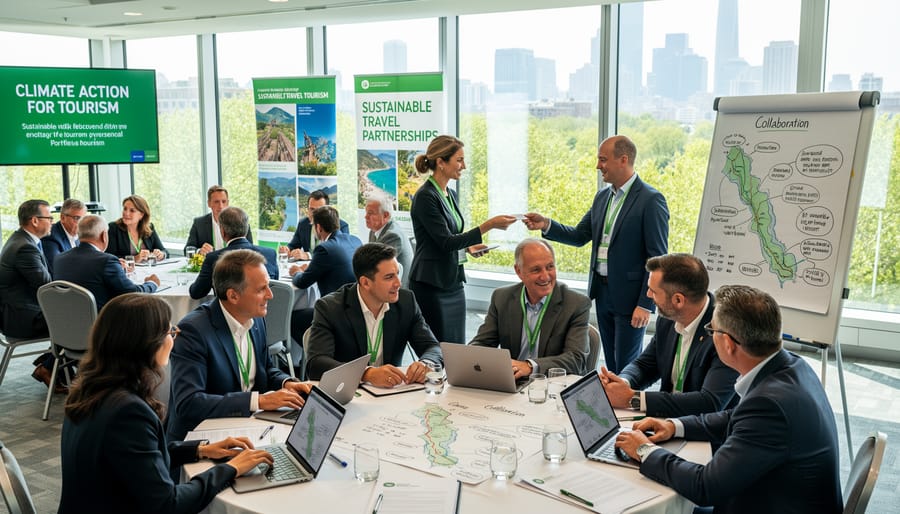
From Conversation to Collaboration
When a destination marketing organisation, a tour operator, a government representative and a community leader sit at the same table, something shifts. Each brings a piece of the puzzle that the others can’t see from where they stand. Operators know what works on the ground. Destination organisations understand the visitor journey. Officials shape the policies that make change possible, and community voices keep the whole effort grounded in what local people actually want.
That mix is exactly what the IMPACT Sustainability Travel & Tourism Summit 2026 is designed to bring together, with destination marketing organisations, tourism operators and government representatives all in one room.
The payoff is practical. Instead of every group solving the same problem in isolation, shared conversations lead to shared strategies that cover environmental, social and cultural sustainability together. A hallway chat becomes a pilot project. A new contact becomes a long-term partner. The collaboration that follows is often where climate action in tourism truly begins.
Putting Local Voices at the Centre
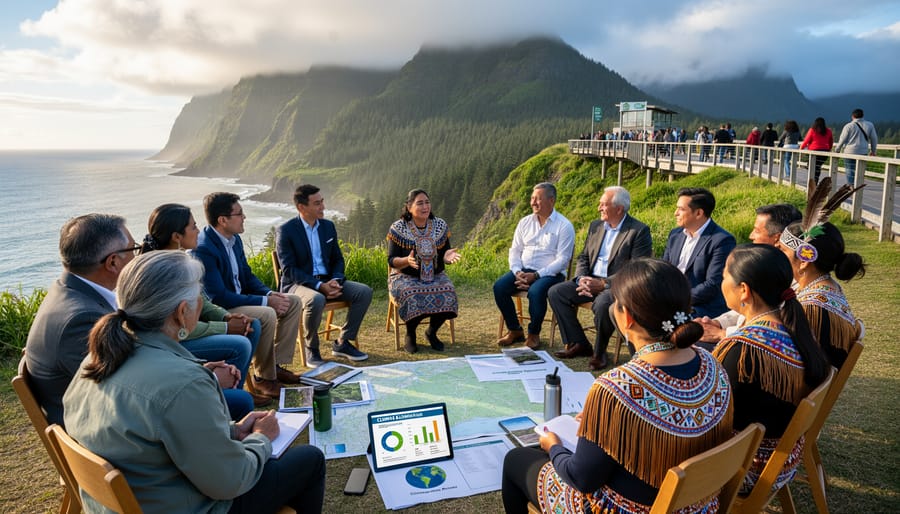
The strongest climate action events make room for the people who live where tourism happens. When community members, Indigenous voices and local decision-makers sit alongside operators and officials, the conversation shifts from what could work in theory to what works in a particular place.
That matters because tourism climate action only succeeds when it is fair and relevant to those who feel its effects first. Local residents understand their landscapes, seasonal rhythms and shared resources in ways no outside plan can match. Their guidance helps projects reflect real priorities, from protecting cultural sites to keeping benefits within the community.
It also builds trust. When people see their input shaping decisions, partnerships last longer and ideas travel further. Gatherings that focus on collaborative strategies for environmental, social and cultural sustainability, like the IMPACT Sustainability Travel & Tourism Summit 2026 in Victoria, are a natural fit for this kind of listening.
When you attend, ask who helped shape the programme, and take time to hear local perspectives. A good question is simple: who in this room lives with the outcomes?
Climate Action Events to Know in 2026
IMPACT Sustainability Travel & Tourism Summit 2026
The IMPACT Sustainability Travel & Tourism Summit 2026 takes place in Victoria, British Columbia, from 25 to 28 January 2026. It’s the kind of gathering that brings tourism stakeholders together around a shared goal: making travel better for the places and people it touches.
The summit’s verified focus is sustainable tourism practices, positive destination impact, and collaborative strategies for environmental, social and cultural sustainability. That three-part lens matters. It treats climate action as one piece of a bigger picture that also includes community wellbeing and cultural heritage.
Just as useful is who sits at the table. IMPACT 2026 will bring together destination marketing organisations, tourism operators, government representatives and other parties. That mix makes it easier to move from an idea to a partnership, because the people who set strategy, run experiences and shape policy are in the same room.
Here’s how it fits alongside the other verified events on the 2026 calendar:
| Event | Dates | Location | Verified focus |
|---|---|---|---|
| xChange 2026 | 10-11 January 2026 | Toronto | See organiser for details |
| IMPACT Sustainability Travel & Tourism Summit 2026 | 25-28 January 2026 | Victoria, British Columbia | Sustainable tourism practices, positive destination impact, collaborative strategies |
| ECO IMPACT 2026 | 19-20 February 2026 | Calgary | See organiser for details |
Programme schedules and participation options aren’t confirmed here, so check directly with the organisers before you plan your trip.
Broader Sustainability Gatherings: xChange and ECO IMPACT
Two other gatherings are worth a look as you plan your 2026 calendar. xChange 2026, titled “Bridging the Past, Building the Future: Engineering Systemic Change,” takes place in Toronto on 10-11 January 2026. Its theme points to a systems-level view of change, which pairs nicely with the practical, project-focused spirit of sustainability work in tourism.
A little later in the season, ECO IMPACT 2026 will be held in Calgary on 19-20 February 2026. Together with the Victoria summit, these dates give Canadian-based professionals a run of opportunities across January and February to meet peers, trade ideas and find potential partners.
A word of caution before you book anything. We have confirmed the names, dates and locations above, but we haven’t verified programme details such as session lineups, speakers or formats. Those specifics can shift, and so can how people are able to take part. The best approach is to check the organisers’ own materials for the latest programme information and registration options. A quick look there will tell you whether an event fits your goals, your team and your travel plans before you commit.
How to Choose the Right Event for Your Goals
The best climate action event is the one that fits what you’re trying to achieve, not the one with the biggest name. A little clarity up front saves time, budget and travel emissions, and it makes the trip far more likely to turn into real projects back home.
Start by thinking about who will be in the room. A gathering that brings together destination marketing organisations, tourism operators and government representatives suits someone who wants to build partnerships across sectors. A smaller, more specialised event may serve you better if you’re after deep technical learning. Then look at the topic focus. Some events centre on sustainable tourism practices and destination impact, while others take a broader view of sustainability across industries. Match the theme to the problem you’re actually trying to solve.
Format matters too. Ask yourself whether you learn best through panels, workshops, field visits or informal networking, and favour events that offer hands-on learning you can put to work straight away. Here’s a simple way to narrow your options:
- Define your goal in one sentence, such as finding a collaboration partner, learning a specific practice, or sharing your own work.
- Review the audience and programme to confirm the right mix of operators, destinations and decision-makers will be present.
- Look for community voices and practical-project content, so you leave with ideas rooted in real places, not theory alone.
- Plan low-carbon travel, such as rail or coach where practical, shared transport, or a longer stay that makes one trip count for several meetings.
- Confirm details directly with organisers, including programme specifics, registration and whether any virtual participation is offered.
That last step deserves emphasis. Details like schedules and remote access can change, so organisers are always your best source. Where a virtual option does exist, it can be a great way to join the conversation while keeping your travel footprint small. With your goal clear and your logistics planned thoughtfully, you can choose an event that gives your time and your community the strongest return.
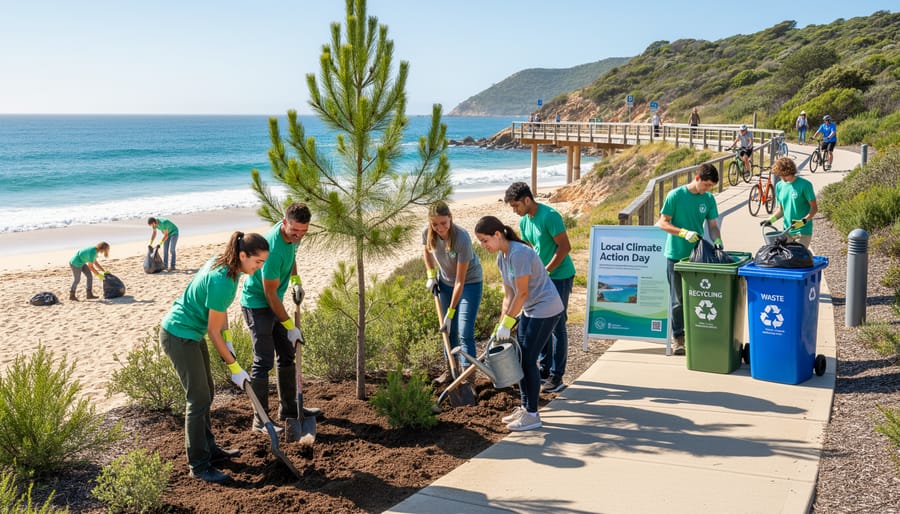
Making the Most of Every Event You Attend
Before You Go
A little preparation turns a good event into a productive one. Start by deciding what you want to leave with: a new partner, a practical idea for your destination, or feedback on a project you’re already running. Then look at the programme and attendee mix to identify the operators, destination organisations or government representatives you most want to meet. Finally, write a short story about your own sustainability work, what you’ve tried, what’s worked and where you’d welcome help. If you’re still working out how to build a sustainable plan say so; it invites conversation.
While You’re There
Once you’re in the room, aim your attention at the sessions and conversations built around collaborative success stories. Look for the moments where a destination organisation, an operator and a community group describe what they achieved together, and what each partner brought to the table.
Then ask about outcomes. A simple question like “How did local residents benefit, and how did you track it?” often leads to the most practical answers. Measurable community results are the clearest sign that an idea has moved beyond the stage.
Make time to listen, too. Local and community perspectives shape what climate action actually looks like in a place, and the hallway chats between sessions are often where those voices come through most openly. Take notes, swap contacts, and follow the threads that excite you.
After You Return
The week you get home is when an event’s value is decided. Block an hour while your notes are still fresh and turn them into a short action plan: three to five commitments, each with an owner and a date. Keep it small enough that you will finish it.
Then share what you learned. Brief your team within days, and send a short summary to community partners you met or hope to work with. Invite their reactions, since local perspectives often show what to prioritise first.
Finally, choose a few simple measures you can report openly, such as new partnerships started, pilot projects launched or community feedback gathered. Review them every quarter and share the results, including what hasn’t worked yet. Transparent tracking builds trust and keeps the momentum going well after the event ends.
Hosting Your Own Climate Action Event
You don’t need a conference budget to bring people together around climate action. A local workshop in a community hall, a regional forum for neighbouring operators, or a half-day roundtable with your destination’s partners can all move things forward. Start with the scale you can host well, then grow it as the relationships deepen.
Begin by co-designing the event with the people it affects. Invite community members, local decision-makers and operators to shape the agenda from the start, so the topics reflect real priorities in your place rather than assumptions from outside. Shared ownership tends to bring richer conversations and stronger follow-through.
Keep logistics light and low-waste. Choose a venue that’s easy to reach on foot, by transit or by shared transport, serve local food on reusable dishes, and skip single-use materials by sharing resources digitally. If your event includes practical learning, a visit to a nearby property can show what everyday action looks like, from hotel energy management systems to water treatment systems giving attendees something concrete to take home.
Make it accessible, too. Pick a step-free space, offer clear schedules in advance, consider a virtual option for those who can’t travel, and set a time and cost that work for community members and small operators alike.
Finally, plan how you’ll track and share outcomes before the first guest arrives. Decide on a few simple measures, such as the number of new partnerships formed, actions people commit to, or waste diverted, and check in on them a few months later. Then publish what you find, including what didn’t work. Your own honest results are the most valuable story you can offer, and they help the next host start a little further along.
Frequently Asked Questions About Climate Action Events
Who should attend a tourism climate action event?
Anyone with a stake in how travel shapes places and communities can benefit, including destination marketing organisations, tourism operators, government representatives and community groups. The best fit depends on your goals and the audience mix an event is designed to bring together.
How do I confirm event details?
Go straight to the organisers. Dates and locations for 2026 gatherings such as IMPACT in Victoria, British Columbia are one thing, but schedules, registration and programme content should always be checked in the organisers’ own materials before you plan.
Can small businesses and community groups benefit?
Absolutely. Smaller organisations often bring the most practical, place-based ideas, and a single good conversation with a like-minded partner can spark a project that grows well beyond the event itself.
How can I reduce the footprint of attending?
Choose lower-carbon travel where you can, travel with colleagues, and keep your stay efficient. If virtual participation matters to you, ask the organisers whether it is offered rather than assuming it is.
Whatever questions you still have, organisers are usually glad to answer them, and a short email can save a lot of guesswork. Asking early also signals that you are serious about taking part, which can open doors to introductions you might otherwise miss.
Every meaningful shift in tourism starts with people in a room, comparing notes and deciding to act together. That’s the quiet power of climate action events. They turn shared commitment into partnerships, and partnerships into projects that benefit the communities that welcome visitors every day.
You don’t need to wait for the perfect moment. The 2026 calendar already offers real opportunities in Toronto, Victoria and Calgary, and each one is a chance to learn, listen and connect. If you want a clear starting point for the wider picture, explore these UN climate actions for tourism and see how your own work fits in.
So pick an event that matches your goals. Invite a colleague, a community partner or a local leader to come along. Then take that first step together, and carry the momentum home.